Protein and Fiber After 40: What You Actually Need to Know
Living between two continents means I get two completely different conversations about health, depending on which side of the Atlantic I'm standing on.
In the US, it's protein, protein, protein. Meat, protein coffee, protein pudding, chicken breast for breakfast. Walk through any grocery store and the word is stamped on half the packaging. In the UK and across Europe, the conversation has shifted somewhere else entirely: gut health. Fiber, fermented foods, diversity on your plate.
Neither side is wrong. But neither side has the whole picture either.
Where the protein push actually gets it right
Protein tends to matter more in midlife, not less. It's what keeps you feeling full between meals instead of hunting the pantry an hour later. And if you've read anything else on this site, you already know why it matters for muscle: after 40, your body simply doesn't hold onto muscle the way it used to, and if you're on a GLP-1, that muscle loss can happen even faster. Getting enough protein is a real, evidence-backed piece of staying strong as you age.
Ask five different sources how much you actually need, though, and you'll get five different answers, some barely above the bare minimum, some pushing numbers that assume you're training for a competition. That range alone tells you something: this isn't settled science the way fiber recommendations are. So I'm not going to hand you a single number here and pretend it's the answer. I'd rather be honest about the disagreement than confidently wrong.
So no, this isn't an argument against protein. It's an argument against protein as the only thing anyone talks about.
Where it overshoots
Here's where I start to disagree with the loudest version of this trend: I don't think anyone needs to be eating meat at every single meal.
More protein doesn't automatically mean more muscle. Your body can only use so much at once, the rest gets processed, stored, or excreted, it doesn't just stack up as strength. And when a diet leans that heavily on meat, especially the highly processed, protein-fortified products lining grocery shelves, there's a real cost. Research on excess protein intake has linked it to reduced gut barrier function and increased production of compounds that can trigger low-grade inflammation. Protein isn't the villain here. But meat-at-every-meal, protein-as-the-organizing-principle-of-every-plate might be.
And there's a cost the trend doesn't talk about: the mental load of tracking it all. Counting grams, checking labels, doing protein math at every meal, that's not nothing. For women already carrying a lot in midlife, one more thing to obsess over isn't a wellness upgrade. It's just more weight.
Want less to track, not more? Grab a free 5-minute strength audio, no equipment, no counting required.
Join the Waitlist → (write "strength" in your message and I'll send it over)
What the gut-health side gets right, and what it's missing too
The UK and European focus on gut health isn't a passing trend, it's backed by a real and growing body of research on how gut microbiome diversity connects to inflammation, digestion, even mood. That's worth paying attention to.
There's a piece of this that doesn't get talked about nearly enough, though: researchers have found a real connection between gut health and the brain fog and mood swings so many women experience during perimenopause and menopause, sometimes called the gut-brain axis. If you've spent months chasing that foggy, can't-find-my-words feeling with everything except your gut, this might be worth a second look.
But here's the piece that rarely gets said out loud on either side of this conversation: one of the most effective, and cheapest, ways to support your gut isn't a supplement or a fermented drink. It's fiber. And almost nobody in the US is getting enough of it.
The number nobody talks about
The average American eats somewhere around 15 grams of fiber a day. The actual recommendation is 25 to 38 grams, depending on your age and sex. That's not a small gap. Most adults are getting less than half of what their body needs, and the USDA itself has flagged fiber as a "nutrient of public health concern" for years. This isn't a fringe claim. It's the government's own guidance, sitting quietly next to all the protein messaging that gets so much louder airtime.
Fiber is what feeds the bacteria that gut-health advocates are so focused on. Without it, all the fermented foods and gut-focused supplements in the world are working with a lot less to work with.
So what's the actual answer
It's not protein versus fiber. It's not America versus everywhere else. The honest answer is duller than either extreme: aim for enough protein to support your muscle, and enough fiber to support everything else, rather than treating them like competing teams.
Personally, I feel better eating this way than I ever did tracking protein grams. Not because I don't know the numbers, years of doing this means I mostly know what's in things without checking. But knowing and logging every bite are two different things, and I feel better doing the first without the second.
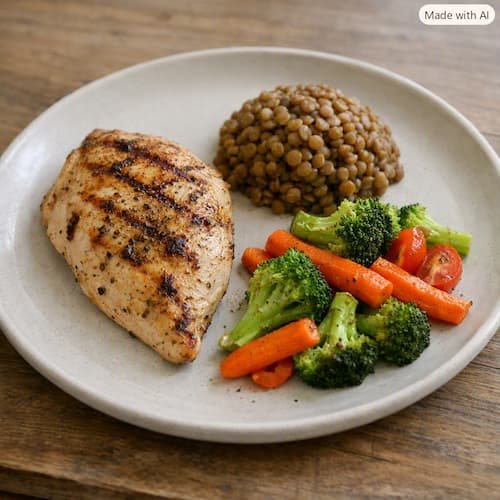
The easiest way to do both at once is to lean on foods that quietly deliver both. Lentils and chickpeas are the simplest example, a cup of either gets you somewhere around 15 to 18 grams of protein and well over half your daily fiber target in one bowl. They're not as flashy as a collagen-and-MCT-oil coffee or as trendy as a gut-health tonic, but that's exactly the kind of unglamorous consistency that actually works over time.
Personally, this combination is what actually keeps me full. Protein alone has never done it for me the way protein and fiber together do.
That's really the whole philosophy behind how I coach, too. Not a rigid rulebook, not the latest extreme, just steady, sustainable choices that add up. The same "something every day" approach that works for movement works for how you eat. You don't need to overhaul everything overnight. You need a plate that has both protein and fiber on it more often than not, and the patience to let that be enough.
Where I actually come in
To be clear, I'm not a nutrition coach, and I'm not offering to build you a meal plan. I do have a real interest in nutrition, and I pay close attention to it, but what I actually coach is movement. The same philosophy applies to both: no extremes, no rigid rulebook, just what your body actually needs that week. Every week, I design your sessions around where you actually are: your energy, your goals, what your body's asking for.
I keep my roster small on purpose. Real personalization doesn't scale. When the waitlist opens, I'm only taking 3.
Join the waitlist now for a free 5-minute strength audio, no equipment, anywhere, anytime.
When you sign up, please write "strength" in the message field so I know to send you the audio.
Layer it in or use it alone. Not perfection. Just something every day.
Join the Waitlist →

Melissa Van is a Pilates teacher, retreat leader, and writer based between the US and Europe. After 20+ years teaching, she built travilates: 1:1 online Pilates coaching for women 45 and up, plus retreats that bring movement and travel together for women at any stage of life. She writes Notes from the Road, weekly reflections on staying steady in midlife, one city at a time.